Posts published in October, 2020
Revisiting Milwaukee: Learning About My Hometown Through Service
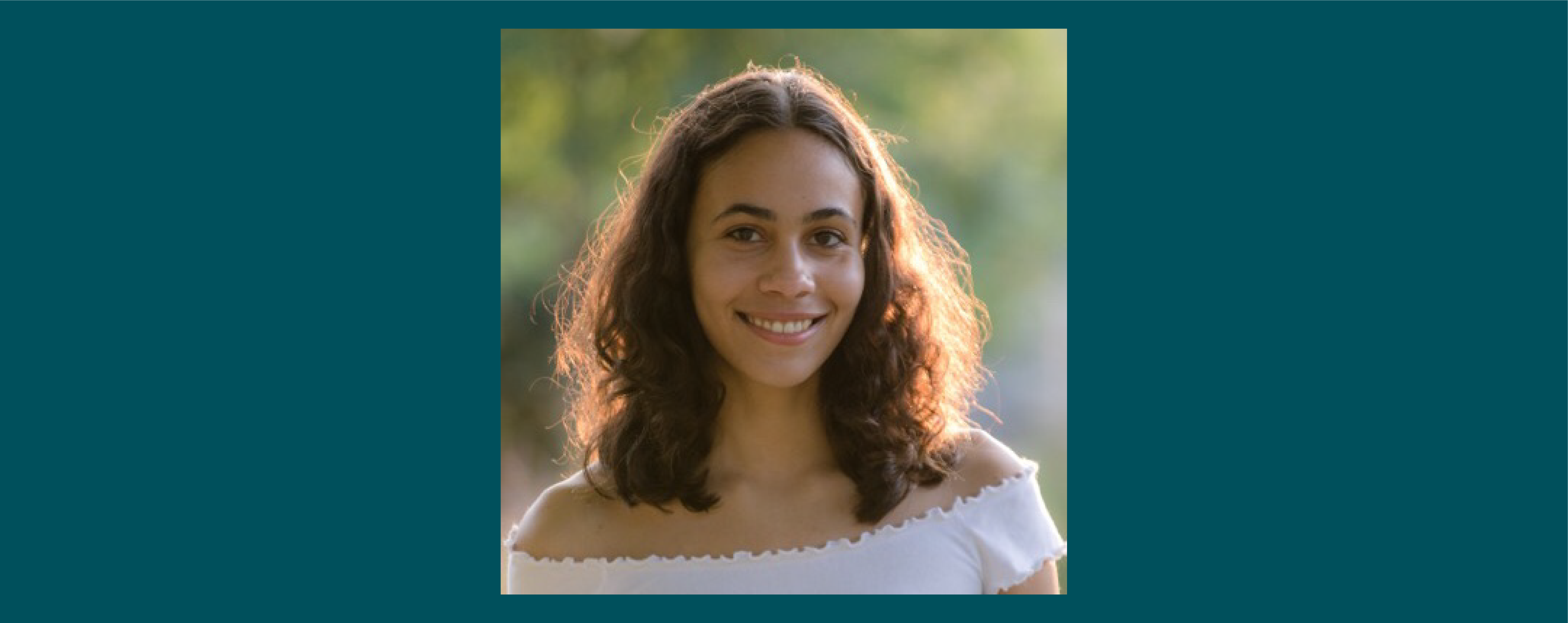
By Elyse Cornwall, ’22
The first time I drove to Moody Park, I suppressed my nerves about driving into an area known for reckless driving. I reminded myself that these feelings came from racist assumptions about a community I had never meaningfully interacted with. Still, I stopped at green lights as oncoming cars ran the red, and rushed down main streets to keep other cars from skirting past me. Thus, I arrived at Moody Park feeling simultaneously afraid and embarrassed, and that was when the youth participants arrived. My primary responsibilities were event planning and coordinating with other volunteers, but I realized that my work behind the scenes could not be effective until I immersed myself in the community I served. When I ate meals, played games, and shared stories at Moody Park, a new side of my service experience emerged.
My weekly discussions with youth living near Moody Park covered topics like drugs and alcohol, police relations, and reckless driving. The group’s familiarity with dangerous situations seemed to contradict their charisma and friendliness. I helped host the Zeidler Center’s listening circle events, which allowed youth and police officers from the area to talk with each other in small groups. The youth took turns responding to prompts such as, “Describe an experience you have had with a police officer,” sharing their experiences rather than debating or convincing anyone. The Zeidler Center hosts listening circles like these throughout the Greater Milwaukee Area, featuring topics like political polarization, race relations, and education. These events are based on the organization’s belief that open, respectful dialogue promotes positive change. I watched as the listening circles at Moody Park shifted from short responses to candid conversation. By the end of the discussions, youth and officers were sharing accounts of their days and stories of hardship, relating to one another on a personal level.
As an outsider in this community, I felt hesitant to expand beyond my role as a staff member, but eventually gave in with the encouragement of the youth and other staff. I shared my own experiences, admitted the gaps in my knowledge of Milwaukee, and put myself in a position to learn from the youth I had aimed to serve. Not only did I feel more connected to a community that I hadn’t interacted with before, but I also felt a stronger obligation towards my city. I found that my view of civic duty and participation changed once I got to know the people with whom I was sharing a community.
By the end of the summer, I started to see my service experience in connection to my parents’ work in Milwaukee as public servants. Usually, I thought of my parents as lawyers who happened to work for the state and county. Though they had expressed pride in serving those who relied upon public legal assistance, I never thought of their occupations as reflections of their character. As a court commissioner, my father has the opportunity to combat the racial bias that targets people with his racial identity in most courtrooms. Like my father, the staff and volunteers at the Zeidler Center prioritize listening to and learning from the communities they serve.
I am glad to have developed this new civic understanding in the context of Milwaukee, through the service I have done. When I returned to Stanford in the fall, I brought with me a willingness not only to serve, but also to know the people within my community who are most targeted and misrepresented.

Elyse Cornwall, ’22, studies computer science at Stanford. Originally from Milwaukee, WI, Elyse completed a Cardinal Quarter in her hometown the summer after her freshman year, working to support the Zeidler Center, an organization that fosters civil dialogue across perspectives. At Stanford, Elyse is a CS106A section leader; a team leader for Ideas Out Loud, Stanford’s TEDx club; and a member of the Delta Delta Delta Sorority.
Flying Solo at the Santa Lucia Conservancy
By Max Klotz, ’20
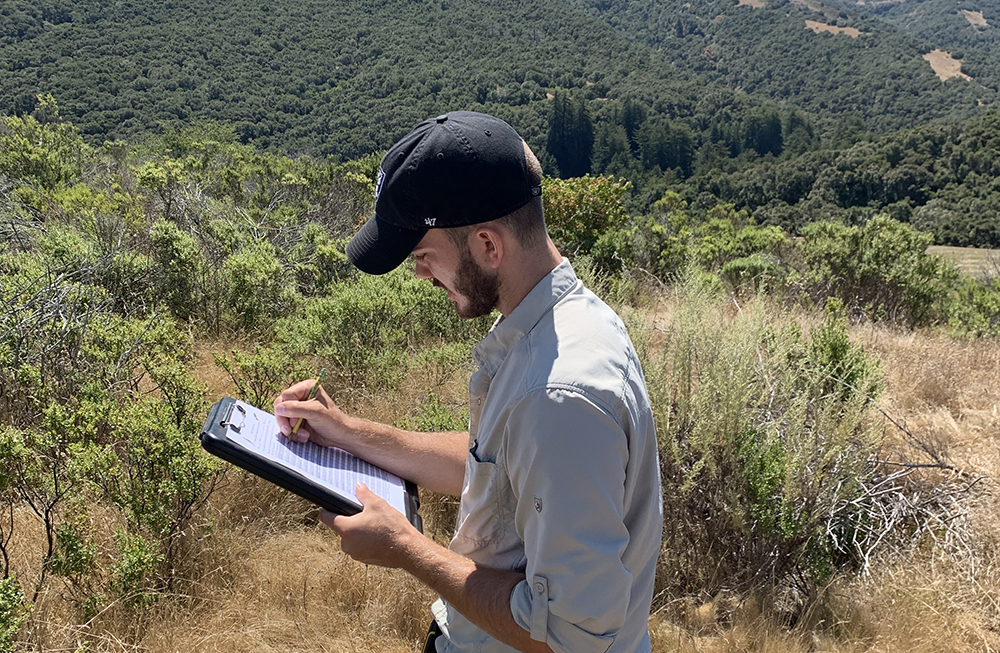
When I made it to the trailhead, Hall’s Ridge was still blanketed in mist. I couldn’t see 15 feet from me, let alone the views down into the valleys on either side of the ridge. I used the delay to organize my photos and make sure I knew the location of each photo point, places with distinctive landmarks that could provide a record for evaluating vegetation changes over time.
The morning mist quickly gave way to sun as, seemingly in minutes, the fog layer around me burned off to reveal views all the way to Monterey Bay. Now having the visibility necessary to capture my photographs, I set off on the trail. I spent the rest of the day hiking and taking pictures, not just of my photo points, but also of the hawks and vultures that circled by the trail.
My project at the Santa Lucia Conservancy in Carmel consisted of selecting and replicating historical photographs of the Santa Lucia Preserve to show the land’s changes over time as part of broader ecological conservation efforts. The process for obtaining repeat photographs of each historical picture was intricate. First, I had to carefully select historical photographs that featured distinctive landmarks in the preserve. Then I worked with my supervisor to identify the approximate locations of each historic photo point and map them using waypoints on the MapItFast software. Finding the exact location for each historical photograph and taking current pictures with the same framing were the final and most challenging steps. I had been struck by the beauty of some of the historical photographs on Hall’s Ridge, so I was excited to explore the area. Early on in my internship at the Santa Lucia Conservancy, I had mostly explored the preserve with other employees, but as my project progressed, I came to enjoy the meditative nature of the days I spent on my own. I set out in a company truck with my water, lunch, camera, and stack of historical photographs. Several weeks into my project, I began to make my way around the different photo locations on the preserve to capture what those photo points look like now. In the process of driving and hiking from place to place in search of historic photo locations, I started to become familiar with the land and its intricacies.

As I looked at my photographs at the end of the summer, I realized the project had shown intriguing results. There had been dramatic changes in some areas of the preserve and a dramatic lack of change in others. Through photography, I was able to track brush encroachment on grasslands, lands recovering from fire treatment, and other broad changes over the course of decades.
This hands-on Cardinal Quarter experience has given me an understanding of the power of combining ecological studies with creative work, as well as a desire to continue to use these tools throughout my career.

Originally from Stanford, CA, Max Klotz, ’20, studies human biology with a concentration in environmental studies. Max completed a Cardinal Quarter during the summer of 2019 with the Santa Lucia Conservancy in Carmel, CA. In addition to engaging in a range of hands-on conservation activities, he helped develop a project to reproduce historical photographs of the Santa Lucia Preserve in order to document environmental change over time. View his “Repeat Photography” project on the Santa Lucia Conservancy website.